
Dynamic Insurance Intelligence for Large-Scale Retail Logistics
The results
Metric
Manual reporting time
Financial statement accuracy
Leadership meeting prep time
Decision-making speed
Before
Static insurance policies for entire vehicles
Premiums based on maximum load assumptions
Inefficient capital allocation
Coverage misaligned with actual cargo value
After
Dynamic segment-based insurance coverage
Real-time cargo valuation and risk assessment
AI-driven insurance selection per route segment
Continuous re-evaluation of exposure and coverage
Industry: Retail, Logistics, and Financial Risk Management
Business Context
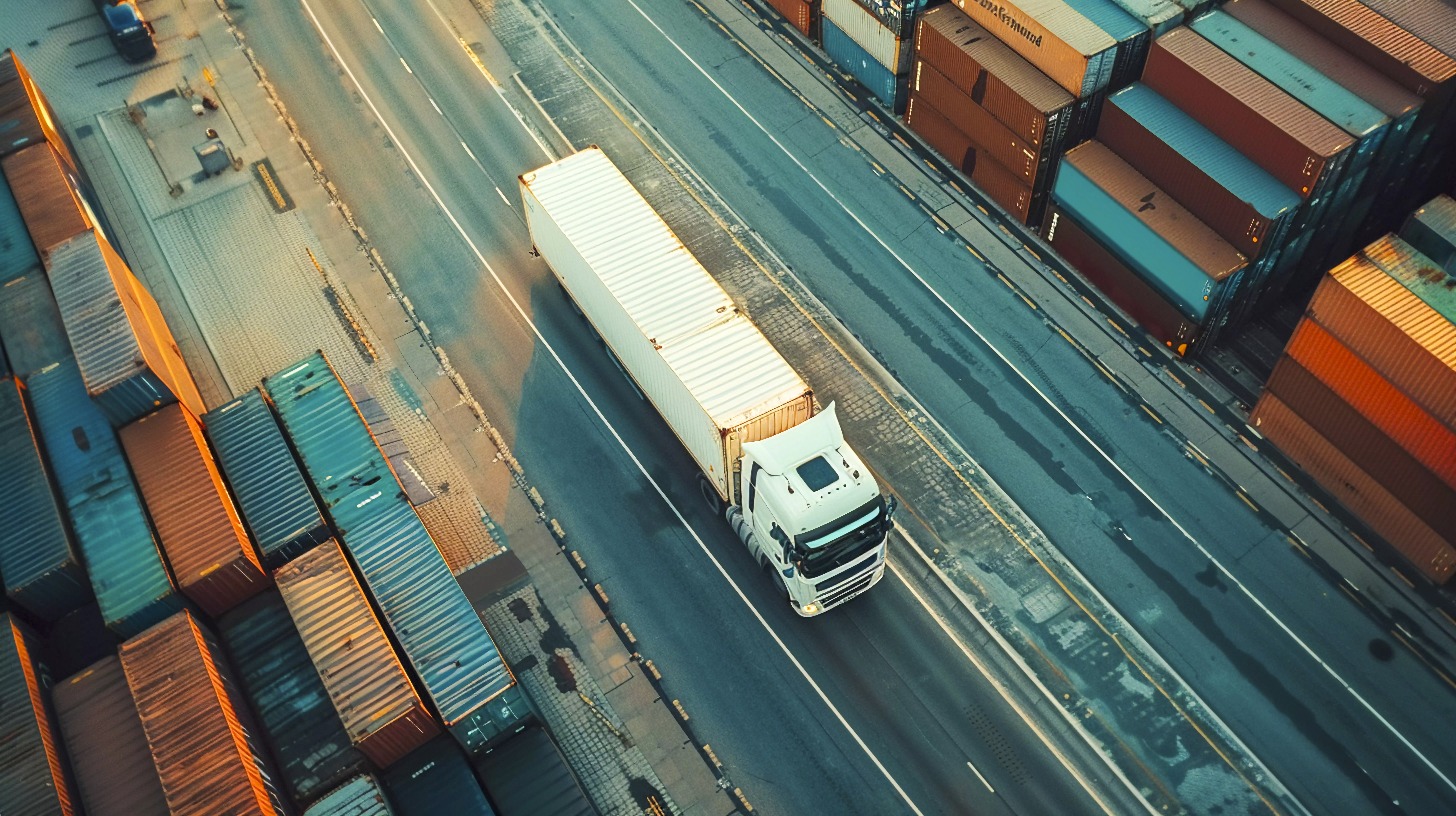
A leading retail organization operating one of the most efficient logistics networks in the country had already reached a high level of operational maturity. Its delivery routes, distribution centers, and inventory flows were optimized to near real-time precision, allowing the company to compete at the highest level despite operating with fewer physical assets than many of its largest competitors.
As part of this operational excellence, the organization partnered with insurance providers to protect the value of goods in transit. While insurance coverage existed, it followed a traditional model: static policies applied to entire vehicles, assuming a constant maximum load throughout the journey.
This approach created a structural inefficiency.
In reality, each delivery route consisted of multiple segments:
- Vehicles departed distribution centers fully loaded.
- Goods were partially unloaded at intermediate stops.
- New items were sometimes added dynamically along the route.
- The value of the cargo changed continuously throughout the journey.
Insuring a truck as if it carried a full load at all times resulted in unnecessary premiums, higher deductibles, and inefficient capital allocation.
Objective
The objective was to design a dynamic, data-driven insurance intelligence system capable of:
- Continuously re-evaluating the insured value of goods in transit.
- Accurately estimating cargo value at each segment of a delivery route.
- Incorporating real-world risk factors such as geography, route safety, and operational conditions.
- Selecting and contracting the most appropriate insurance coverage per route segment.
- Reducing overall insurance costs without compromising risk protection.
The solution needed to operate at massive scale, integrating seamlessly into an already highly optimized logistics ecosystem.
Architectural Approach
Rather than introducing a new monolithic system, the solution was designed as a lightweight intelligence layer integrated into the existing data and orchestration environment.
At a high level, the architecture consisted of:
-
Event-Oriented Data Ingestion Logistics, inventory, and routing systems continuously emitted events representing:
- Cargo composition
- Quantity changes
- Route progression
- Delivery confirmations
- New item allocations
These events were orchestrated through a centralized workflow layer that ensured consistency, ordering, and traceability.
-
Logical Asset Representation Each delivery vehicle was modeled as a logical asset with a continuously evolving state. As goods were loaded, unloaded, or rerouted, the digital representation of the vehicle was updated in near real time.
-
Segment-Based Route Modeling Routes were decomposed into discrete segments (origin → stop → stop → destination). Each segment represented a unique insurance exposure profile.
This architectural decomposition enabled precise valuation and risk assessment at each point of the journey.
Data Intelligence and Valuation Modeling
One of the core challenges was determining the true insurable value of goods in transit.
Goods were not yet owned by the retailer while in transit; they were held under consignment. Therefore, valuation could not rely on supplier cost alone.
To address this, valuation models were introduced that:
- Estimated retail value based on product type, quantity, and historical pricing.
- Considered packaging structure (individual items vs. cases).
- Applied contextual pricing multipliers based on category and region.
These models transformed raw logistics data into financially meaningful representations of cargo value.
Risk-Aware AI Agents
AI agents were introduced to orchestrate and operationalize decision-making across multiple dimensions.
Risk Assessment Agents
These agents combined:
- Cargo valuation outputs
- Route characteristics
- Historical incident data
- Environmental and infrastructural risk indicators
Using this information, they generated a probabilistic risk profile for each route segment.
Insurance Selection Agents
Based on the risk profile and cargo value, a decision-making agent:
- Evaluated available insurance options.
- Selected the most appropriate coverage for the specific segment.
- Balanced premium cost, deductible exposure, and coverage limits.
Instead of purchasing a single, static policy, the system dynamically contracted segment-specific insurance, covering only the actual exposure at that moment in time.
Deep Agents for Continuous Re-Evaluation
Deep Agents continuously monitored:
- Changes in cargo composition.
- Deviations from planned routes.
- New stop insertions or load reallocations.
Whenever a material change occurred, the system automatically:
- Recalculated cargo value.
- Re-assessed risk.
- Adjusted insurance coverage accordingly.
This ensured that coverage always matched reality—not assumptions.
Governance, Compliance, and Auditability
Given the financial and regulatory implications, governance was built into the system by design.
- Every valuation decision was traceable back to source data.
- Every insurance contract was linked to a specific route segment and time window.
- All agent decisions were logged and auditable.
- Risk and valuation models were versioned and reproducible.
This provided confidence to both internal stakeholders and external insurance partners.
Business Impact
The solution delivered significant, measurable benefits:
-
Reduced Insurance Spend Insurance premiums were aligned with actual exposure rather than worst-case assumptions.
-
Lower Deductible Risk More precise coverage reduced unnecessary deductible exposure.
-
Operational Agility Insurance decisions adapted automatically to real-world logistics changes.
-
Financial Accuracy Cargo valuation reflected true retail exposure rather than supplier cost.
-
Scalable Risk Intelligence The system operated across thousands of routes and assets concurrently.
Strategic Significance
This case demonstrated how AI agents and Deep Agents can extend beyond analytics into financial execution, dynamically managing risk, cost, and compliance in real time.
By embedding intelligence directly into logistics workflows, the organization transformed insurance from a static overhead into a precision financial instrument, fully aligned with operational reality.
The result was not just cost optimization, but a new paradigm for risk-aware retail operations at scale.
Key Features Used
- Event-oriented data ingestion from logistics systems
- Segment-based route modeling and valuation
- AI agents for risk assessment and insurance selection
- Deep Agents for continuous cargo monitoring
- Automated insurance contracting and adjustment
Discover more real-world AI implementations
Subscribe to receive detailed case studies, measurable outcomes, and lessons learned from AI deployments in complex operations.